Clinic Listings Checker

Your clinic’s name, address and phone are published in dozens of places. When they disagree, Google trusts all of them a little less. This check compares five fields across every listing it finds, all of them against your Google Business Profile, and shows where your details have drifted apart.

Run the listings auditRuns inside RepHigh · free to monitor
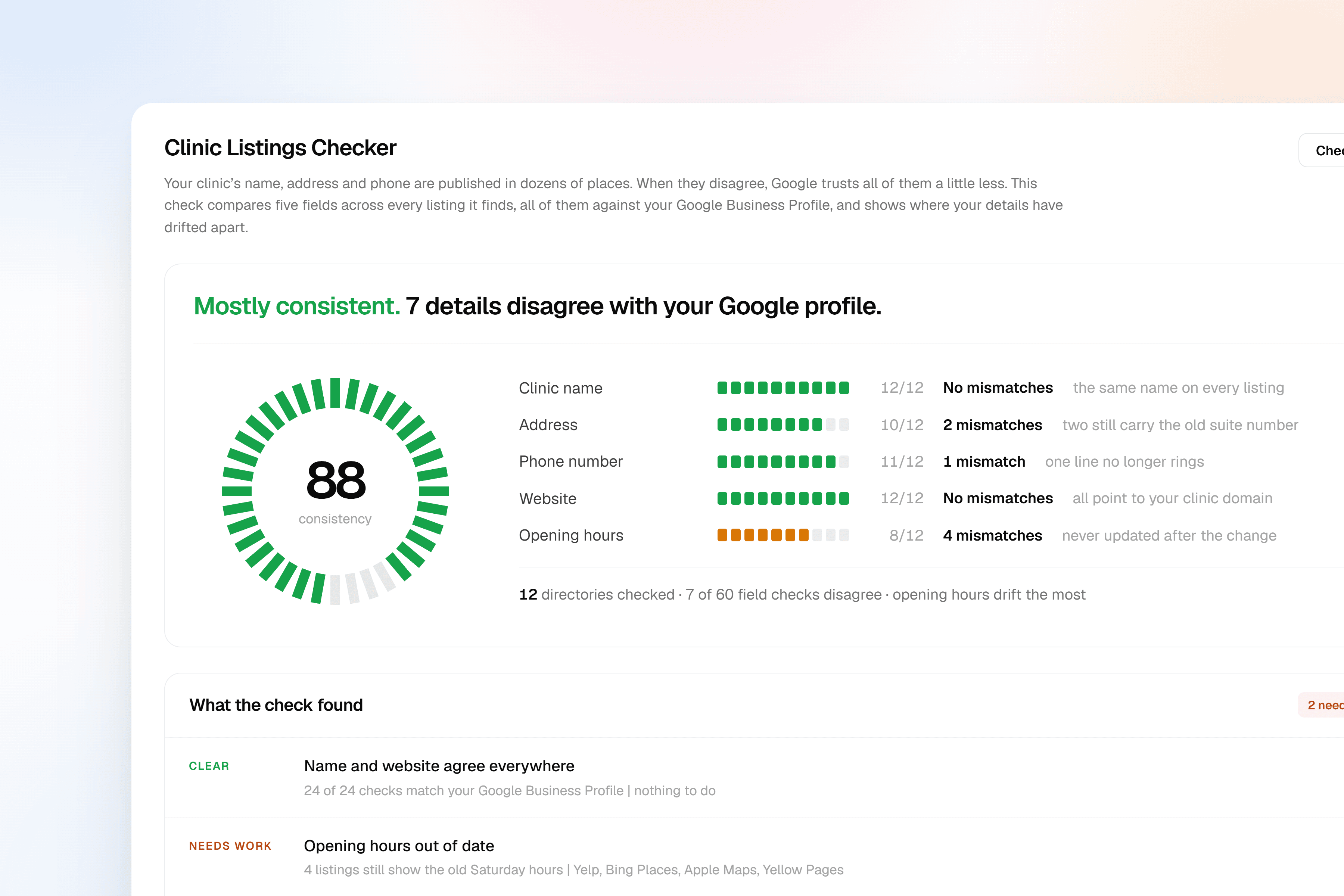
A listings consistency check comparing a clinic’s name, address, phone, website and opening hours across twelve directories against its Google Business Profile

How to use the free Listings Checker

  1. 1

    Enter your clinic and we look for it across the directories patients use in the UAE.

  2. 2

    Every listing we find is compared with your Google Business Profile, field by field.

  3. 3

    Fix the ones that disagree, starting with phone and address.

What is RepHigh’s Listings Checker?

It is a free check for private clinics in Dubai that looks for your clinic across the directories patients search, and compares what each one says with your Google Business Profile.

The industry calls this NAP consistency: name, address, phone. The idea is simple. Google reads your details in many places, and every version that disagrees is a reason to be slightly less certain which one is right.

Certainty matters because Google will not confidently show a business it cannot pin down. An old suite number on one directory and a former landline on another are not typos to a search engine; they are competing claims about who you are.

The check reports what each source says, which fields differ, and which listings are missing you entirely.

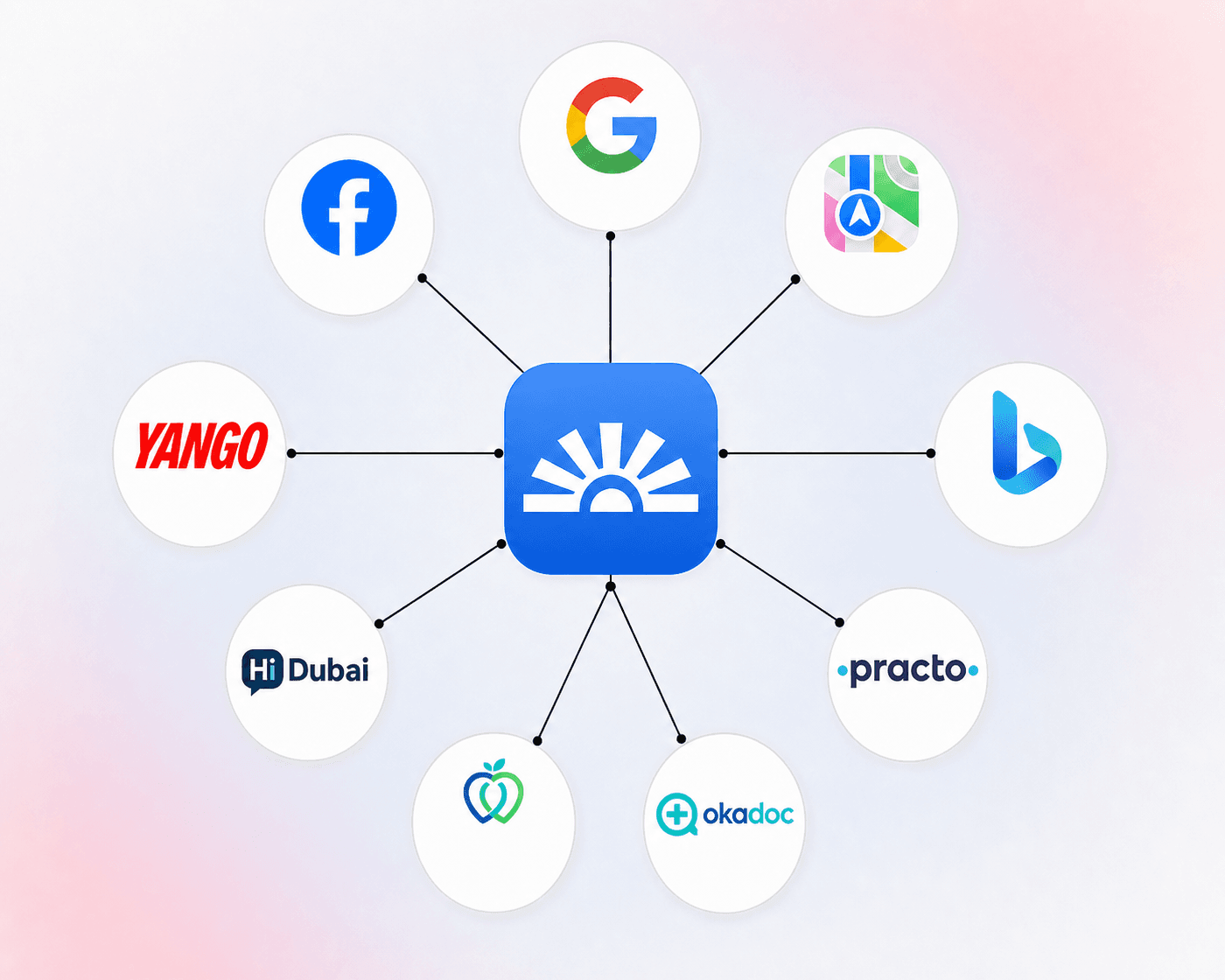
One clinic’s details flowing out to many directory listings
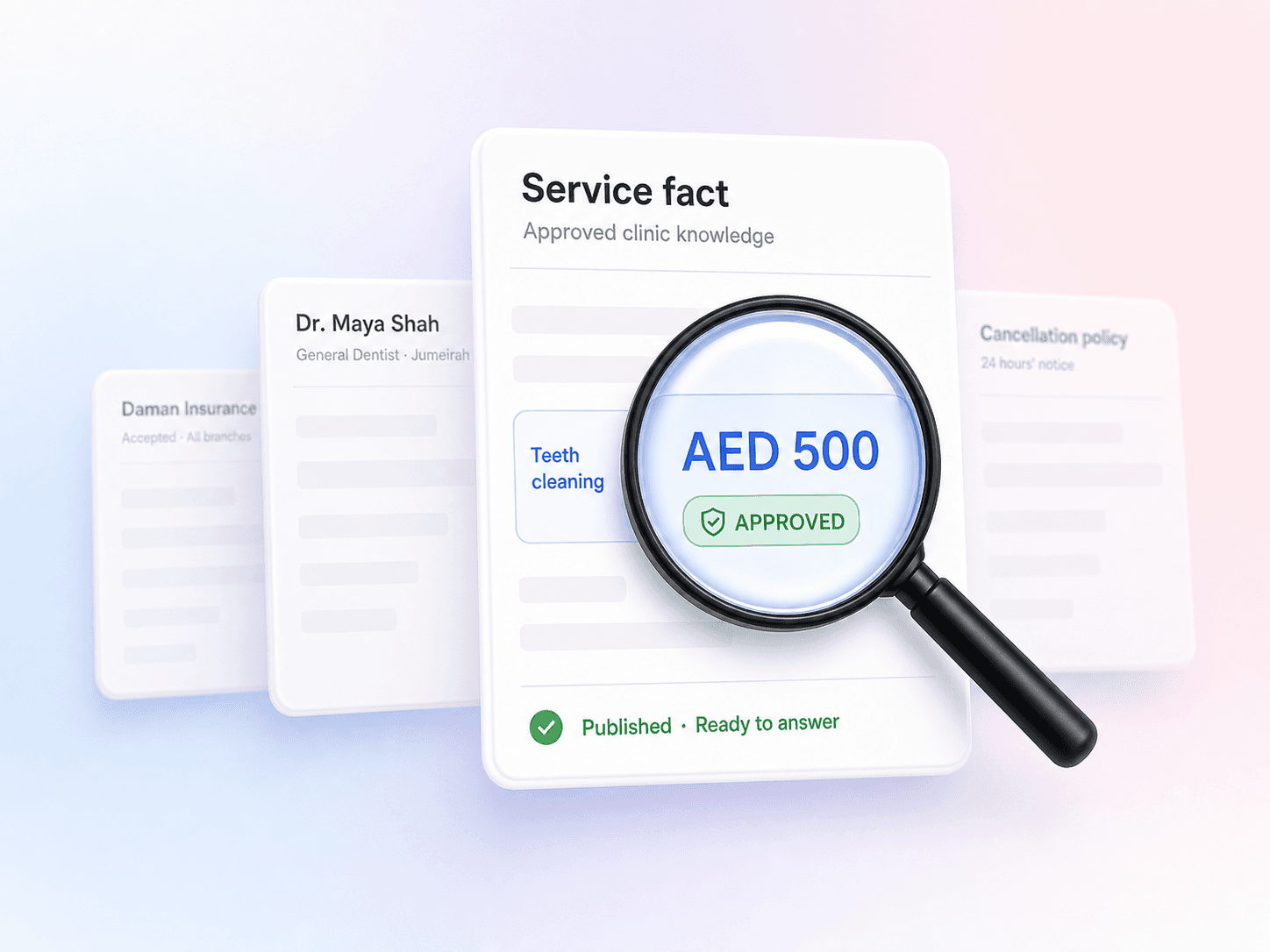
One approved version of a clinic’s details, checked before it is published: the price, the treating doctor, the insurer accepted and the cancellation policy

Why your clinic listings matter

The direct cost is the obvious one: a patient calls the number they found and reaches a line you gave up two years ago. Nobody tells you about that call. It simply does not arrive.

The indirect cost is larger and slower. Local ranking leans on how consistently the world describes your clinic, and a clinic described three different ways is a clinic Google shows less often.

Clinics collect these inconsistencies the way anyone does: a move, a rebrand, a new number, a listing built by a staff member who left. None of it is anyone’s fault, and none of it corrects itself.

It is also the least glamorous work in local search, which is precisely why the clinics that do it end up ahead of the ones that do not.

Turn your check into always-on listings management

The check tells you where the details disagree. RepHigh Local Visibility AI keeps one record of your clinic and watches the directories against it, so a listing that drifts is caught rather than discovered.

It also handles the part nobody enjoys: the submissions, the claims and the corrections, and the re-checks that prove they held.

See Local Visibility AI
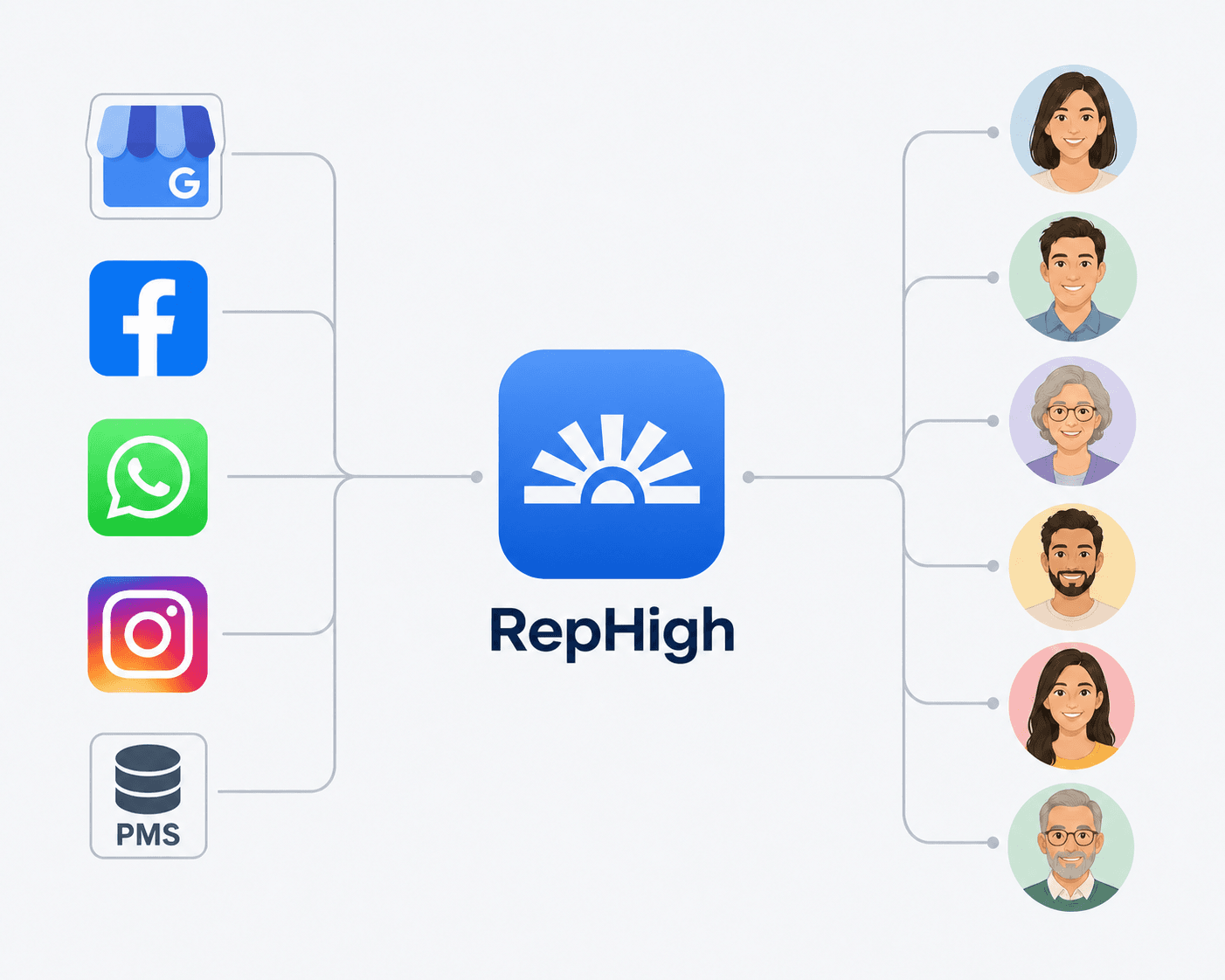
A clinic’s Google profile, social channels and practice management system feeding one RepHigh record, which reaches every patient from that single source

Which fields do we compare?

Five fields, on every listing we can find, each one measured against your Google Business Profile rather than against the other listings. Google is the record patients see most and search engines weight highest, so it is the version everything else has to agree with.

  • Clinic name: The exact name each directory publishes, compared with your Google Business Profile. Small differences matter less than people fear, and “Dr” against “Doctor” is just noise. A former trading name, a branch suffix on one listing and not another, or a name stuffed with treatments are all things Google reads as different businesses.
  • Address: Building, suite, area and city, compared field by field rather than as one string, so a listing missing only the suite number is not reported as if it named the wrong building. Dubai addresses are where consistency goes to die: the same clinic sits on Al Wasl Road in one listing, Jumeirah 1 in another, and a tower name in a third. Every version teaches Google a different location, and a clinic it cannot place is a clinic it hesitates to show for “near me”.
  • Phone number: The number each listing publishes, normalised before anything is compared, so +971 4 123 4567 and 04 123 4567 are one number rather than two problems. Only a genuinely different line counts. This field carries the most weight of the five, because it is the only one where the cost is immediate rather than gradual: a wrong address loses you a little ranking over months, and a wrong number loses you the patient who was dialling as they read it.
  • Website: Where each listing actually sends a patient. Old domains, landing pages built for a campaign that ended, and links to a booking tool you stopped paying for in 2024 all send people somewhere that is not you. There is a second cost underneath the first: every listing pointing at a different address splits the signals that would otherwise reinforce one site, so the domain you want ranking gets a fraction of the credit it has earned.
  • Opening hours: What each listing says you are open, compared day by day with your Google profile. This is the field that drifts furthest, because hours change more often than anything else about a clinic and almost nobody goes back to the directories afterwards. A patient who arrives on a Saturday you no longer open does not call to complain. They go somewhere else and leave a review about it.

Coverage is reported beside these five and never scored inside them. A directory that does not carry your clinic is not a failure, and it will never cost you points here. It is the opposite: the directories your competitors appear in and you do not are the cheapest places left to be found. The other free checks: Business Profile Checker, AI Visibility Checker, Google Reputation Checker.

How to read your consistency score

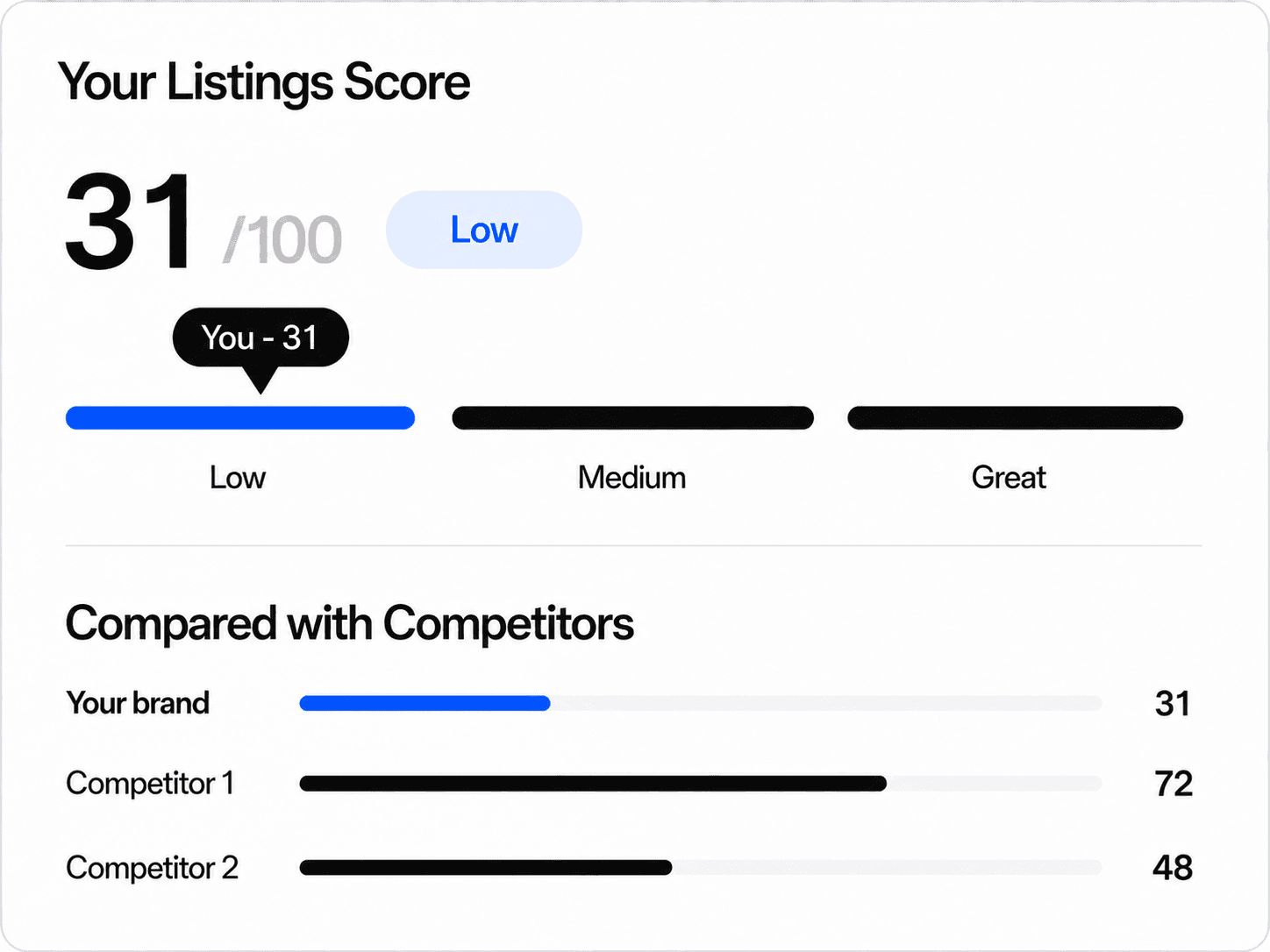
The score is one number for how much the world agrees about your clinic, out of 100.

It is built from the five fields the check compares: name, address, phone, website and opening hours, weighted by what each one costs when it is wrong. A stale phone number outranks a missing suite number, because one loses the patient mid-call and the other loses you a little ranking.

Every listing we find is compared against your Google Business Profile rather than against each other, because that is the record Google weights highest and the one patients see most.

Formatting is normalised before anything is compared, so a phone number written three ways is not reported as three problems. Only real disagreements count.

A directory that does not carry you at all is reported, never scored: absence is an opportunity, not a fault.

Treat it as a baseline. Correct the field that disagrees most, run it again, and watch the number move. The comparison against nearby clinics, shown alongside, is what Local Visibility AI adds on top.

A listings score of 31 out of 100 in the Low band, shown beside two nearby clinics scoring 72 and 48

How to improve your listings consistency

Five habits that stop the drift, in the order they pay off. The first two are an afternoon. The rest are a note in the calendar.

Write down the one true version

Name, address, phone, website and hours, in one document everyone at the clinic works from. Almost no inconsistency starts with carelessness. It starts with two people publishing in good faith from memory, six months apart, and remembering the suite number differently. Decide the canonical version once and the argument never has to happen again.

Fix Google first, then match everything to it

Correct the Business Profile, then make every other listing agree with it, never the other way round. Google is the record patients see most and search engines weight highest, so it is the version worth defending. Fixing a directory to match a Google profile that is itself wrong is a day spent spreading the error further.

Chase the phone number before the address

Both matter and only one is urgent. A wrong address costs you a little ranking over months, quietly, in a way no report will ever attribute to it. A wrong number costs you the patient who was dialling as they read it, today. That call does not bounce, does not complain and does not appear as a gap anywhere you would think to look.

Claim the listings you never made

Most directory listings for a clinic were created by somebody else: an aggregator copying public data, a staff member who has since left, or the directory itself. You cannot correct what you do not control, so claiming comes first, usually through a verification call or an email to a domain address. Start with the listings carrying a wrong number.

Re-check the week after anything changes

A move, a new branch, a rebrand, a new phone system, even a change to Saturday hours. These are the only moments consistency actually breaks, and the fix is cheap while you still remember which listings exist. Left a year, the same change becomes an archaeology project across directories nobody has logged into since.

RepHigh, in-house, or an agency

The same work, done three ways. What differs is who carries it, how fast it happens, and what it costs you each month. The plans are on pricing.

CapabilityRepHighLocal Visibility planDo it yourselfReception teamHire an agencyRetainer
Finding every listingSearched, matched and held in one recordOne directory at a time, by handA bulk submission run at onboarding
Keeping them in stepCompared against your Google profile, continuouslyCorrect on the day somebody fixed itCorrect while the sync tool is paid for
Making the correctionSubmitted for you, then read back to confirm it tookWhoever still has the login for that siteBatched in with the rest of the retainer
Duplicate listingsFlagged when two records share your name and numberAlmost never looked forSometimes covered, often extra
Directories you are missing fromReported as an opportunity, never as a faultUnknown, so never acted onSold on as a citation-building package
Your team’s time each monthReading and approving, nothing elseSeveral hours, never billed to anyoneBriefing calls and report meetings
What it costsOne fixed subscription, whatever the volumeNothing on paper, paid in staff hoursA retainer, usually the largest of the three

Listings questions, answered

Rubric and copy last updated 14 August 2026.

What is NAP consistency?

NAP consistency is the practice of publishing exactly the same name, address and phone number for your business everywhere it appears online. NAP stands for those three fields, and consistency means every directory, review site, map and social profile agrees on them. It matters because a search engine reading four different versions of your address has four competing claims about where you are, and a business it cannot pin down is a business it shows less often. The effect is cumulative rather than dramatic. No single wrong listing removes you from search. What happens instead is that each disagreement shaves a little certainty off every listing you have, including the accurate ones, and the clinic never learns why it slipped. For a clinic the practical version is simpler still: decide the one true version of your details, write it down, and make every listing match it.

Which directories matter for a clinic in Dubai?

Google first, by a distance no other source comes close to. After that, the regional health directories patients actually browse, the map and place-data providers that feed apps and car navigation, the insurer networks that publish provider lists, and the general UAE business listings that syndicate onward to sites you have never visited. That last group is why a wrong detail spreads: you correct it in one place and it reappears from an aggregator that still holds the old version. Coverage matters far less than agreement. Ten listings that say the same thing are worth more than forty that contradict each other, because the value of a listing is the confirmation it gives a search engine, and a listing that disagrees confirms nothing.

Does a wrong phone number on one directory really matter?

More than anything else on the listing. A wrong address costs you a little ranking, slowly and invisibly. A wrong phone number costs you the patient who was already dialling, and that is a different kind of loss: the call simply never arrives, nobody reports it, and there is no gap in any report where it should have been. It is the only inconsistency that has an immediate price rather than a gradual one, which is why it is worth chasing before the address and long before the opening hours. Old numbers survive in surprising places. A clinic that changed its line three years ago will still find it on a directory listing built by a staff member who has since left, and on every aggregator that copied that listing.

Should I pay a service to sync my listings?

It depends entirely on what happens when you stop paying. A sync service pushes one record out to many directories and holds them in step while the subscription runs, which is genuinely useful work and tedious to do by hand. Ask any vendor the awkward question before you sign: when the subscription ends, what happens to the listings it was maintaining? Some services push data continuously rather than making a permanent edit, so the corrections hold only as long as the payments do. A correction made directly at the source is yours permanently. A correction held in place by a subscription is rented, and the difference only becomes visible on the day you cancel.

How do I fix a listing I never created?

Claim it first, then correct it. Most directory listings for a clinic were never created by the clinic. Some were built by a staff member who has since left, some were copied automatically from an aggregator, and some were generated by the directory itself from public data. All of them are correctable, but only after you prove the business is yours, which usually means a verification call, an email to a domain address, or a postcard. Work in the order that pays: claim and correct Google first, because it is the record everything else is measured against and the one patients see; then the directories carrying a wrong phone number; then the rest. A listing you cannot claim can normally still be reported as incorrect, which is slower but works. The directory set here is built around the UAE, so it is most useful for clinics in Dubai and the Emirates.

Stop guessing what patients see when they look you up.

The free checks tell you where your clinic stands today. RepHigh keeps it there, across reviews, your Google profile and every directory patients search.